



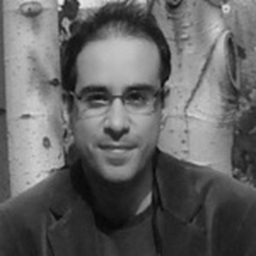
Welcome to our lab! Our research focuses on understanding how the brain generates complex functions through multisensory integration. Everyday tasks such as maintaining balance, perceiving spatial orientation, or feeling stable within the environment may seem effortless, but they rely on remarkably sophisticated neural processes that continuously integrate and update sensory information and integrate them into various cognitive functions. These processes form the foundation for how we move through and interact with the world around us.
In our lab, we are interested in understanding how the brain performs these computations, identifying the neural networks involved, and mapping the brain mechanisms underlying spatial orientation, eye movements, balance, and self-motion perception. We believe that understanding these systems is key to better understanding common but often disabling symptoms such as dizziness, vertigo, imbalance, and spatial disorientation, and ultimately to developing better diagnostic tools, treatments, and rehabilitation strategies.
Our work combines neuroscience, engineering, computational modeling. Our research programs span several interconnected areas, including: Basic mechanisms of space and motion perception, attention, cognition, and ocular motor control Mathematical and computational modeling of vestibular and ocular motor function Development of advanced eye movement measurement systems and portable diagnostic tools, Neuromodulation and treatment strategies for neuroglial disorders affecting spatial perception and balance, Biomedical engineering and technology integration, including wearables and mobile applications Advanced analytic and computational methods, including programming, signal analysis, and statistical modeling.
Education and collaboration are also central to our mission. We are committed to training future generations of clinicians, scientists, and engineers through interdisciplinary mentorship, research training programs, and international collaborations. Our lab values teamwork, creativity, scientific curiosity, and an inclusive environment where people from different backgrounds and disciplines can work together to solve complex problems

I am a biomedical engineer and neuroscientist with experience in eye-movement recording and computational modeling of oculomotor and psychophysical data. Building on a foundation in bioengineering and visual neuroscience, I have studied ocular motor control and visual functions in primates, healthy participants, and patients with disorders affecting eye movements and spatial perception. My current work focuses on quantitative frameworks to characterize distinct sensory contributions that shape the perception of spatial orientation.
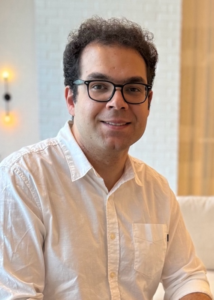
I am a postdoctoral fellow focused on translating quantitative vestibular and oculomotor science into clinical practice. His work involves the use of video-oculography (VOG) alongside balance and postural assessments in both healthy individuals and patient populations. Across projects, I contribute to study design, statistical modeling, and advanced data visualization, with the goal of converting precise eye-movement metrics and clinical data into standardized pathways that improve diagnosis and patient outcomes.

I am a postdoctoral researcher with in physics and neuroscience. My current research focuses on combining Transcranial Magnetic Stimulation (TMS) with computational modelling to map neural circuits related to spatial perception. I am also passionate about developing data-driven pipelines to extract physiologically and clinically meaningful insight from biomedical datasets, ranging from neuroimaging to biomechanical data.
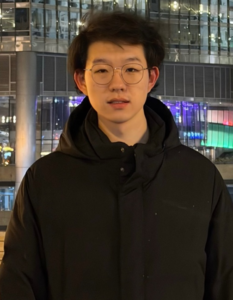
I am a Ph.D. student in Computer Science working on the development of a robot-assisted platform for transcranial magnetic stimulation (TMS). This project is aimed at improving the accuracy and reproducibility of magnetic stimulation for functional brain mapping. My research more broadly focuses on integrating hardware and algorithms for tracking eye movements, quantifying human posture, and enabling robot-assisted procedures. I am also involved in designing and validating an affordable, webcam-based system for assessing posture and balance in clinical settings.
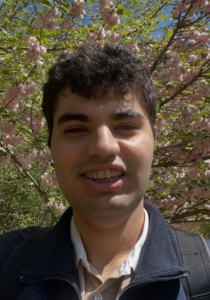
I am an undergraduate student in Neuroscience at Johns Hopkins. I am involved in a research project that examines visual motion perception by measuring a phenomenon known as autokinesis. in parallel, I am part of a research study investigating key functional components of visuospatial memory using a virtual reality-based task.

I am a senior undergraduate student at Johns Hopkins majoring in Systems Neuroscience. I am currently involved in a study investigating whether subtle, involuntary eye movements can serve as predictors of visual motion perception, with the aim of developing a quantitative framework of how the brain integrates oculomotor to maintain stable visual perception.
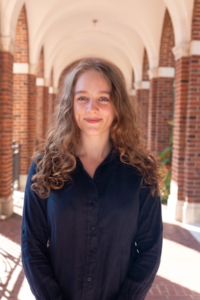
I am an undergraduate student in computer science at Johns Hopkins. I am currently involved in software development and workflow integration for robot-guided transcranial magnetic stimulation (RA-TMS). My current project is focused on integrating a simulation component into an existing TMS software pipeline to help streamline the stimulation planning. By connecting computational modeling tools with visualization and control systems, we aim to make it easier for researchers to prepare, test, and run stimulation sessions within a single, more cohesive environment. This work supports more efficient experimentation and improves the usability of the lab’s TMS platform.
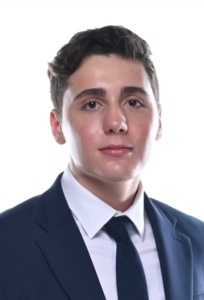
I am an undergraduate majoring in Neuroscience at Johns Hopkins. I am a team member in studies investigating key functional components of visuospatial memory and postural control using inertial measurement units (IMU) and marker-less video-based methods. In these projects, I am involved with data collection and analysis.
Welcome to our lab! Our research focuses on understanding how the brain generates complex functions through multisensory integration. Everyday tasks such as maintaining balance, perceiving spatial orientation, or feeling stable within the environment may seem effortless, but they rely on remarkably sophisticated neural processes that continuously integrate and update sensory information and integrate them into various cognitive functions. These processes form the foundation for how we move through and interact with the world around us.
In our lab, we are interested in understanding how the brain performs these computations, identifying the neural networks involved, and mapping the brain mechanisms underlying spatial orientation, eye movements, balance, and self-motion perception. We believe that understanding these systems is key to better understanding common but often disabling symptoms such as dizziness, vertigo, imbalance, and spatial disorientation, and ultimately to developing better diagnostic tools, treatments, and rehabilitation strategies.
Our work combines neuroscience, engineering, computational modeling. Our research programs span several interconnected areas, including: Basic mechanisms of space and motion perception, attention, cognition, and ocular motor control Mathematical and computational modeling of vestibular and ocular motor function Development of advanced eye movement measurement systems and portable diagnostic tools, Neuromodulation and treatment strategies for neuroglial disorders affecting spatial perception and balance, Biomedical engineering and technology integration, including wearables and mobile applications Advanced analytic and computational methods, including programming, signal analysis, and statistical modeling.
Education and collaboration are also central to our mission. We are committed to training future generations of clinicians, scientists, and engineers through interdisciplinary mentorship, research training programs, and international collaborations. Our lab values teamwork, creativity, scientific curiosity, and an inclusive environment where people from different backgrounds and disciplines can work together to solve complex problems
I am a biomedical engineer and neuroscientist with experience in eye-movement recording and computational modeling of oculomotor and psychophysical data. Building on a foundation in bioengineering and visual neuroscience, I have studied ocular motor control and visual functions in primates, healthy participants, and patients with disorders affecting eye movements and spatial perception. My current work focuses on quantitative frameworks to characterize distinct sensory contributions that shape the perception of spatial orientation.
I am a postdoctoral fellow focused on translating quantitative vestibular and oculomotor science into clinical practice. His work involves the use of video-oculography (VOG) alongside balance and postural assessments in both healthy individuals and patient populations. Across projects, I contribute to study design, statistical modeling, and advanced data visualization, with the goal of converting precise eye-movement metrics and clinical data into standardized pathways that improve diagnosis and patient outcomes.
I am a postdoctoral researcher with in physics and neuroscience. My current research focuses on combining Transcranial Magnetic Stimulation (TMS) with computational modelling to map neural circuits related to spatial perception. I am also passionate about developing data-driven pipelines to extract physiologically and clinically meaningful insight from biomedical datasets, ranging from neuroimaging to biomechanical data.
I am a Ph.D. student in Computer Science working on the development of a robot-assisted platform for transcranial magnetic stimulation (TMS). This project is aimed at improving the accuracy and reproducibility of magnetic stimulation for functional brain mapping. My research more broadly focuses on integrating hardware and algorithms for tracking eye movements, quantifying human posture, and enabling robot-assisted procedures. I am also involved in designing and validating an affordable, webcam-based system for assessing posture and balance in clinical settings.
I am an undergraduate student in Neuroscience at Johns Hopkins. I am involved in a research project that examines visual motion perception by measuring a phenomenon known as autokinesis. in parallel, I am part of a research study investigating key functional components of visuospatial memory using a virtual reality-based task.
I am a postdoctoral researcher with in physics and neuroscience. My current research focuses on combining Transcranial Magnetic Stimulation (TMS) with computational modelling to map neural circuits related to spatial perception. I am also passionate about developing data-driven pipelines to extract physiologically and clinically meaningful insight from biomedical datasets, ranging from neuroimaging to biomechanical data.
I am an undergraduate student in computer science at Johns Hopkins. I am currently involved in software development and workflow integration for robot-guided transcranial magnetic stimulation (RA-TMS). My current project is focused on integrating a simulation component into an existing TMS software pipeline to help streamline the stimulation planning. By connecting computational modeling tools with visualization and control systems, we aim to make it easier for researchers to prepare, test, and run stimulation sessions within a single, more cohesive environment. This work supports more efficient experimentation and improves the usability of the lab’s TMS platform.
I am an undergraduate majoring in Neuroscience at Johns Hopkins. I am a team member in studies investigating key functional components of visuospatial memory and postural control using inertial measurement units (IMU) and marker-less video-based methods. In these projects, I am involved with data collection and analysis.